Contents
When the opportunity to walk the floor is limited
Why the timing matters: four shifts changing how work gets done today
Introducing Dialogue: closing the game between leadership and the frontline
Book a demo of Dialogue
“We’ve become very good at collecting signals: surveys, sentiment scores, dashboards, and data, but perhaps less good at understanding what people are trying to tell us.”
That was how David Fairhurst opened his speech at the launch of WorkBuzz Dialogue.
David is exactly the kind of leader who would know, having been Global CPO at McDonald’s, HR Director at Tesco, and Director of Recruitment & Leadership Planning at GSK. Therefore, we were intrigued to hear his take on how well leaders are listening and learning from their workforces in the current climate where speed matters - but not at the expense of reflection, challenge or good judgment.
When the opportunity to walk the floor is limited
Walking the floor used to be how the best leaders spotted problems early, understood how work was being done, and got verbatim feedback from employees - it was the original operational listening tool. But, in large complex organisations that may be distributed across sites, geographies, and time zones, walking the floor in the traditional sense can’t be scaled.
As a result, leaders become distanced from the frontline, relying on filtered or delayed information to make decisions that affect their people, customers and business performance. As David put it, there is a real risk in large organisations "that senior leaders slowly drift away from operational reality."
There are workarounds and David shared a few examples. At McDonalds office-based teams spent time in stores reconnecting with frontline reality. At GSK some of the best insight came from spending time with medical representatives in the field; hearing customer conversations, seeing obstacles firsthand, and understanding what work really felt like.
So, while dashboards can tell leaders what’s happening, proximity helps leaders understand why. The need to combine these two viewpoints of ‘what’s happening’ and ‘why’, is how the idea for WorkBuzz Dialogue was conceived.
Why the timing matters: four shifts changing how work gets done today
Remote, hybrid, distributed businesses are nothing new, but there are emerging trends that further compound the argument for combing surveys and dashboards-style listening, with something more operational:
- Work is being redesigned, not just automated. Roles, responsibilities, and expectations are evolving faster than formal structures can keep up.
- Behavioural change is outpacing policy and process. New tools are reshaping judgment, confidence, learning and risk-taking.
- Speed is increasing, reflection is shrinking. Efficiency gains can come at the cost of collaboration, challenge and development.
- Human capability is now the differentiator. Judgment, empathy and contextual thinking matter more as AI takes on routine work.
Against this backdrop, a tool like Dialogue brings a whole new view point to tuning in to the employee voice.
Introducing Dialogue: closing the game between leadership and the frontline
Dialogue allows leaders to stay close to the frontline and to tap into the collective ideas of their workforce, enabling quick course correction regardless of the organisation’s:
- size
- geographic spread
- complexity
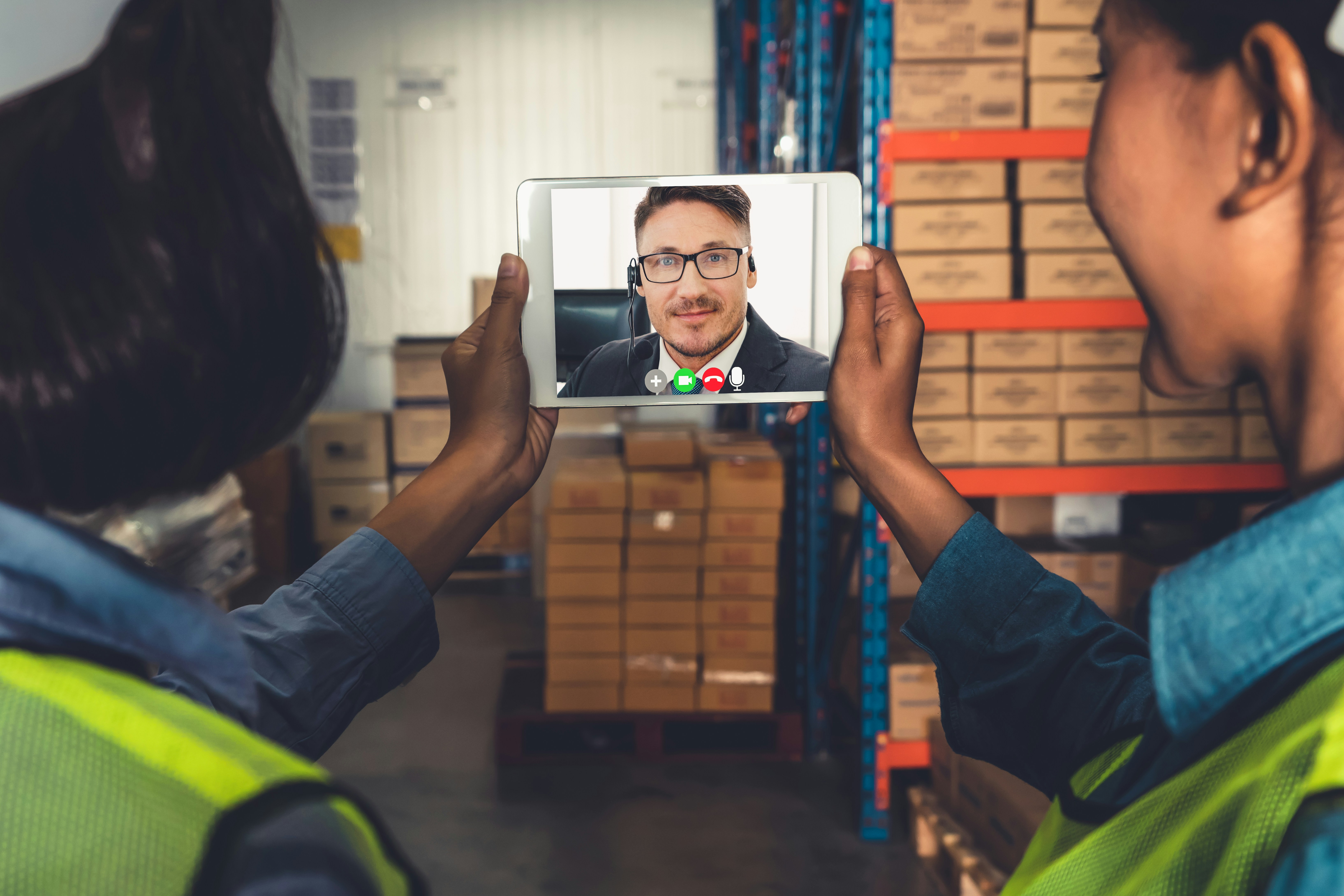
Leaders ask a focused question by video and receive honest, unfiltered responses by video, voice note or text. AI distils those responses into clear themes and actionable insight within hours, not weeks. Leaders close the loop with a second short video outlining what they heard and what they’ll do.
The insight that was previously trapped in the organisation (in the heads of the people closest to the work, the friction, the customer) now becomes accessible. Course corrections happen earlier and the connection between leadership and the frontline, begins to rebuild.
Dialogue isn’t a replacement for surveys and dashboards; it’s the operational listening layer that sits alongside them. As David put it at the close of the evening:
"One thing I learned leading large operational workforces is this: engagement is rarely created in the annual survey cycle. It's created in thousands of moments."