


Some of the most valuable operational improvements start with feedback from the people closest to the work. The question is whether what they know ever reaches someone who can act on it.
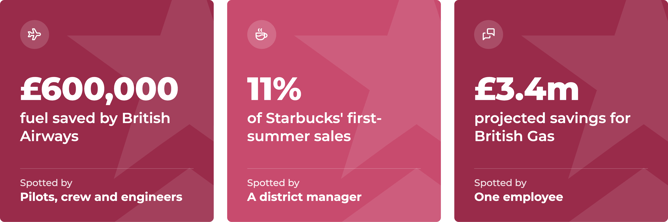
Descaling the toilet pipes on its Boeing 747 and 777 aircraft helped British Airways save around £600,000 in fuel.
The idea didn’t come from a strategy meeting. It came out of a push to cut unnecessary aircraft weight, built on ideas from pilots, cabin crew, engineers and ground staff.
It was a small, practical observation. But at an airline’s scale, small changes add up fast.
The customer service colleague who knows why complaints take so long to resolve. The engineer who can see exactly where time and resources are being wasted. The store manager who knows why a new initiative isn’t landing with customers.
They’re not usually the people setting strategy or making investment decisions. They’re the people seeing how those decisions play out. Some of what they know reaches the people who can act on it. Much of it loses its context on the way up, arrives too late, or never surfaces at all.
That’s the real cost. Organizations don’t lack information. Their most useful knowledge just never meets the decisions it could improve.
It’s not a one-off
Starbucks. A district manager noticed local cafés selling blended iced coffee and pushed for Starbucks to offer its own. The Frappuccino went on to make up a reported 11% of sales in its first summer.
The lesson: people closest to customers often spot a shift before it shows up in sales data. The value comes from noticing it in one place and scaling it everywhere else. For anyone running multiple sites, that raises a bigger question: how many good ideas are emerging in individual locations right now, and never reaching the people who could scale them?
British Gas. An employee saw a way to simplify the customer complaints process by cutting unnecessary steps and the time it took to resolve issues. The change was projected to save £3.4 million over five years.
The lesson: a dashboard shows complaint volumes and handling times. It won’t show you the duplicate data entry or the extra approval holding everything up, but the people doing the work can. Repeated thousands of times a year, those small frictions become a material cost to the business.
What the dashboard can’t tell you
Operational reporting is good at telling you what happened. It’s less good at telling you why.
Take a retailer rolling out a new checkout process across 200 stores. Teams are trained, the technology is live, and the programme update says it’s done.
But in some stores the queues are longer. The dashboard shows wait times creeping up. It doesn’t show the extra step colleagues are struggling with, or the workaround managers have invented to keep things moving. Meanwhile, a manager at one location has already found a better way. The answers exist. They’re just not connected.
Rolled out isn’t the same as working. A process can go live without being adopted consistently. A technology investment can launch without delivering its expected return. A new operating model can look good in a programme update while creating extra work for the teams expected to use it.
Leaders need more than confirmation that a change has happened. They need confidence that it’s working, and a way to tell whether a problem is isolated or systemic, and which fixes are worth scaling.
Where organization knowledge gets lost
Strip away the methodologies and frameworks, and operational excellence comes down to one question: how consistently can your organization identify, implement and scale improvements that make the business work better?
That depends on two things: how quickly problems and opportunities become visible, and how quickly the organization can act on them. Both rely on knowledge flowing from the people closest to the work.
In larger organizations, that knowledge usually passes through layers of management and reporting before it reaches anyone who can change things. Two things tend to happen along the way.
Priorities drift from reality. Central teams focus on what they can see in reports and audits. The repeated delays, workarounds and small frustrations colleagues deal with every day are harder to see. So the improvement backlog fills up with what’s easiest to measure, not with what would make the biggest difference.
Improvement becomes an event, not a habit. Kaizen events and process reviews create real momentum. But if colleagues have no simple way to raise what they’re seeing between those events, good ideas wait for the next one.
Neither problem comes from a lack of commitment. It comes from distance: the people solving the problems are too far from the people living with them.
What happens when you ask those closest to the work directly?
Operational leaders are accountable for outcomes they can’t personally see. Nobody can be in every store, distribution centre, contact centre or shift. And when performance slips, the questions come quickly. Why is one location outperforming another on the same process? Why are we still dealing with an issue we thought we’d fixed months ago?
Operational reporting, management updates and employee surveys all remain essential. But they don’t always fit a question that’s specific, urgent and happening right now.
Picture a leader asking teams across 100 sites one specific question and getting answers back the same day:
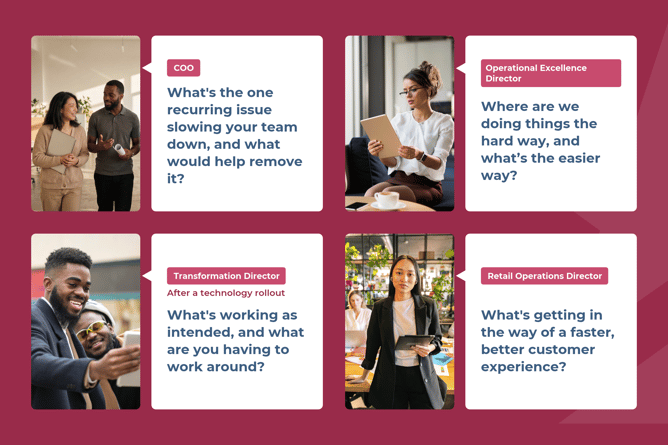
These aren’t sentiment questions. They’re about productivity, cost, execution and customer outcomes. The answers give leaders the context reporting can’t: what’s happening, where it’s happening and why. That's operational listening: turning what your people know into intelligence that improves how the business performs.
How WorkBuzz Dialogue works
Dialogue connects operational leaders with the people closest to the work, so that what those people know shapes the decisions that matter.
- Record a Loop. A leader records a short video question about a specific challenge and sends it to anywhere from 50 to 20,000 colleagues, in under five minutes.
- Colleagues reply in their own words, by video, voice or text - and anonymously, if they want.
- Get the Insights. AI groups the contributions into themes, surfaces outliers and keeps the tone and context.
- Close the Loop. The leader tells colleagues what they heard and what happens next, within minutes.
A full cycle can run in under 90 minutes. That’s fast enough to shape a decision rather than explain one afterwards.
The result: a clear view of what’s really happening across sites, which problems are isolated and which are systemic, and the fixes worth scaling. And colleagues see their input acted on, so they keep speaking up.
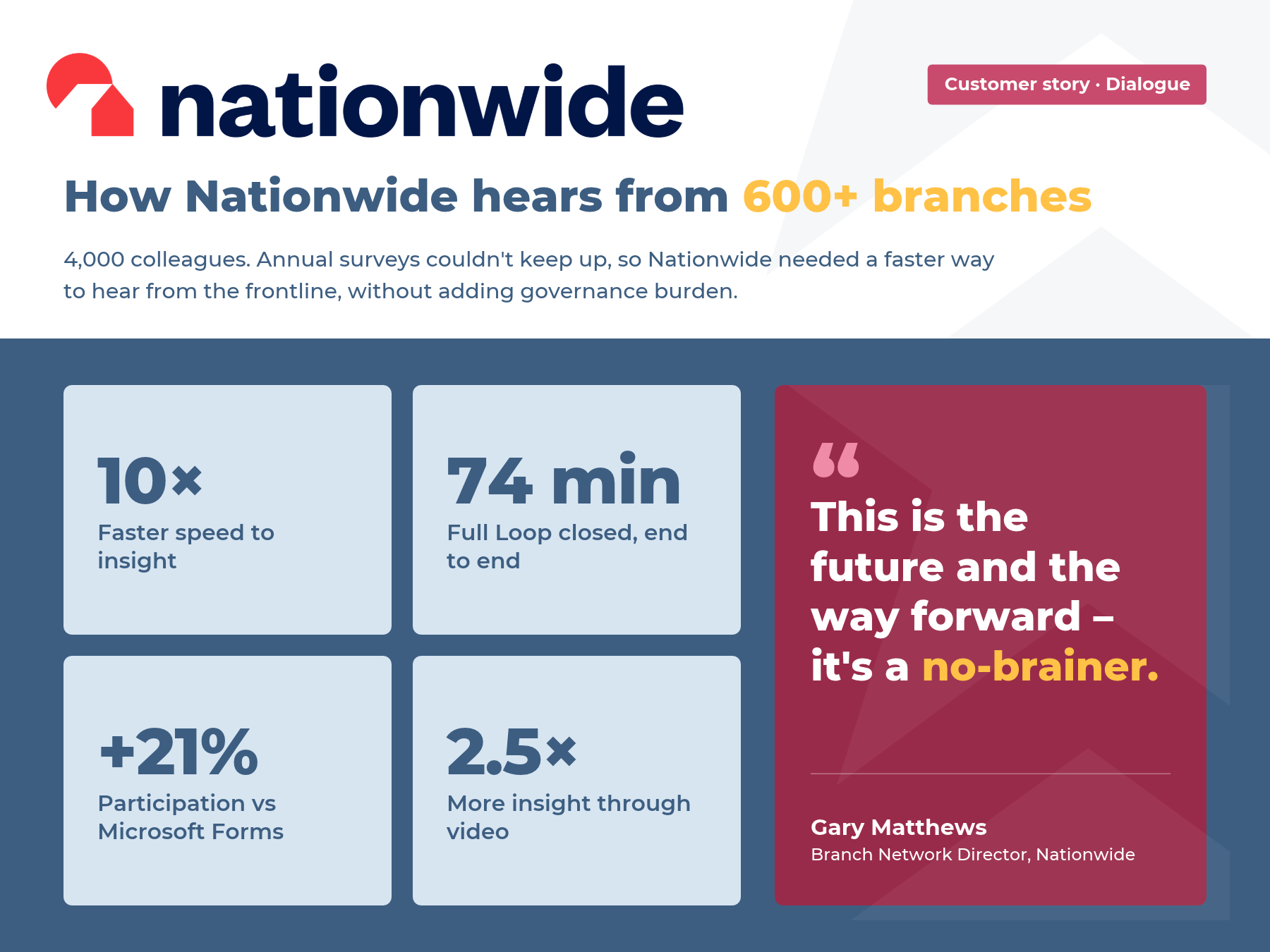
Dialogue doesn’t replace your reporting, management structures or improvement programmes. It adds what they’re missing: the knowledge, context and ideas of the people who know the operation best. Less second-guessing. Fewer surprises. More confidence that decisions are grounded in operational reality.
Hear it before it shows up in the numbers
Your colleagues already knows where time is being lost, which changes aren’t landing and what would work better. When leaders close the Loop, colleagues see that their ideas haven't disappeared into another reporting exercise. They've reached someone who can do something about them. That's how one good answer becomes a habit.
Keep going further
Hive is Now a WorkBuzz Company, Accelerating Employee Listening for UK Organisations
Hive joins WorkBuzz

Feedback is only as good as the questions you ask
The success of every organisations employee listening strategy starts with one thing: the right questions. Whatever method you're using to listen, that's where it begins.
WorkBuzz Summer Series - Watch
SUMMER SERIES Four mini podcast episodes, released weekly throughout August 2026.
Nothing here yet for this topic — check back soon.