Quick Links
⛓️💥 Introduction: A profession at breaking point
♟️ Rebuilding HR’s strategic influence
🔄 The HR reset starts with partnership
🗣️ AI: From buzzword to burden-breaker
🧘 Wellbeing: HR’s greatest paradox
📡 Communication: The golden thread
🌱 The HR reset: From survival to influence
How HR can move from firefighting to future-shaping, redefining priorities in a world of transformation and wellbeing challenges
Introduction: A profession at breaking point
If there’s one word that sums up the state of HR heading into 2026, it’s exhausted.
More than half (53%) of HR professionals have been under constant strain in the past six months, and a third say it’s getting worse. The teams responsible for caring for everyone else are, ironically, running on empty.
Yet within this exhaustion lies a once-in-a-decade opportunity. As organisations battle transformation fatigue, AI disruption, and wellbeing crises, 2026 is shaping up to be the year HR stops firefighting and starts future-shaping.
The burnout breaking point
HR has become the engine room of change—from restructures to digital transformation to the relentless “productivity squeeze.” But with many HR teams shrinking or stagnating, workloads have become overwhelming.
This vicious cycle—fewer people, heavier demands, and constant firefighting—has left HR reactive, not strategic. The result? Diminished influence, depleted wellbeing, and disengaged workforces.
It’s clear: the profession that drives wellbeing across organisations must now secure its own.
Rebuilding HR’s strategic influence
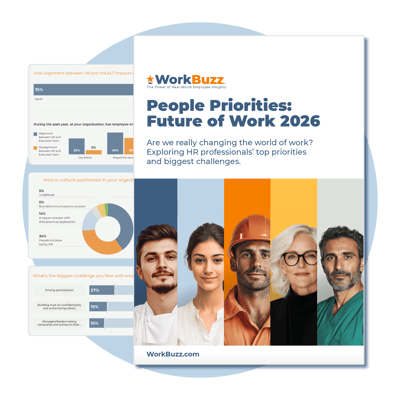
To move forward, HR must reset its relationship with leadership. The WorkBuzz Future of Work 2026 report reveals that where HR and executive teams are aligned, engagement and wellbeing are significantly stronger.
In businesses where that alignment is missing, fewer than one in ten saw engagement improve last year. When HR isn’t at the decision-making table, employees feel the disconnect too.
The HR reset starts with partnership:
- Embed HR leaders in executive decisions from the start.
- Align people priorities with business strategy.
- Establish clear two-way communication and shared accountability.
As Melisaan Foster, Chief Experience Officer at WorkBuzz, puts it:
“Where the senior team is aligned, they’re more likely to recognise the importance of investing in HR—benefitting the whole workforce and culture.”
AI: From buzzword to burden-breaker
AI is poised to help HR shift from overload to insight—but adoption is still patchy. Nearly 70% of HR teams are only experimenting with AI, and fewer than 20% use it as a core part of their workflow.
Yet the potential is transformative. Used well, AI can:
- Eliminate hours of manual data analysis.
- Turn employee feedback into actionable insights.
- Predict emerging risks to engagement and culture.
WorkBuzz’s People Science AI is one example of this next wave—helping HR translate listening data into instant, shareable reports and action plans. As Lead People Scientist Nour Atik notes:
“Given the pace at which AI is changing the workplace, why isn’t AI adoption much further along? It’s the solution to automate tasks, increase productivity and help wellbeing.”
Responsible AI adoption doesn’t remove the human touch—it restores it, giving HR back the time to focus on what matters most: people.
Wellbeing: HR’s greatest paradox
Employee wellbeing remains the number one HR priority for 2026 (44%), yet it’s also HR’s biggest pain point.
When 60% of employees cite unsustainable workloads as the main wellbeing barrier, it’s clear the problem isn’t mindfulness apps—it’s structural.
For HR to lead the wellbeing agenda, it must first protect its own. That means:
- Investing in HR team capacity to match business demands.
- Empowering line managers with tools like ACT to take local ownership of engagement and wellbeing.
- Making wellbeing metrics visible and tied to performance outcomes.
After all, HR can’t pour from an empty cup.
Communication: The golden thread
Every insight from the 2026 report comes back to one word: communication.
In organisations where internal communication is effective, confidence in leadership is 58 points higher.
Employees don’t want more messages—they want meaningful ones. Regular updates, visible action on feedback, and authentic two-way dialogue are the difference between engagement and indifference.
“More is better when it comes to internal communication. Without it, employees lose faith in leadership and culture weakens.”
— WorkBuzz Future of Work 2026
The HR reset: From survival to influence
2026 isn’t just another year—it’s a crossroads. HR has the data, the tools, and the mandate to shape the future of work, not just react to it.
By realigning with leadership, adopting AI that lightens the load, and making wellbeing a strategic foundation, HR can move from survival mode to influence mode.
The world of work isn’t slowing down. But HR doesn’t have to keep firefighting. This is the year to hit reset—and lead with purpose, insight, and humanity.
Book a 20-minute chat with our experts using the form below to explore how AI-powered employee listening can turn insights into action—and help your team move from firefighting to future-shaping.